
Nigeria Launches Nationwide Education Data System, Reaching More Than 40 Million Learners
The Digital National Education Management Information System (DNEMIS), built on DHIS2, went live nationwide on July 1, capturing data on more than 124,000 schools and 40 million learners—one of the world’s largest DHIS2 implementations.
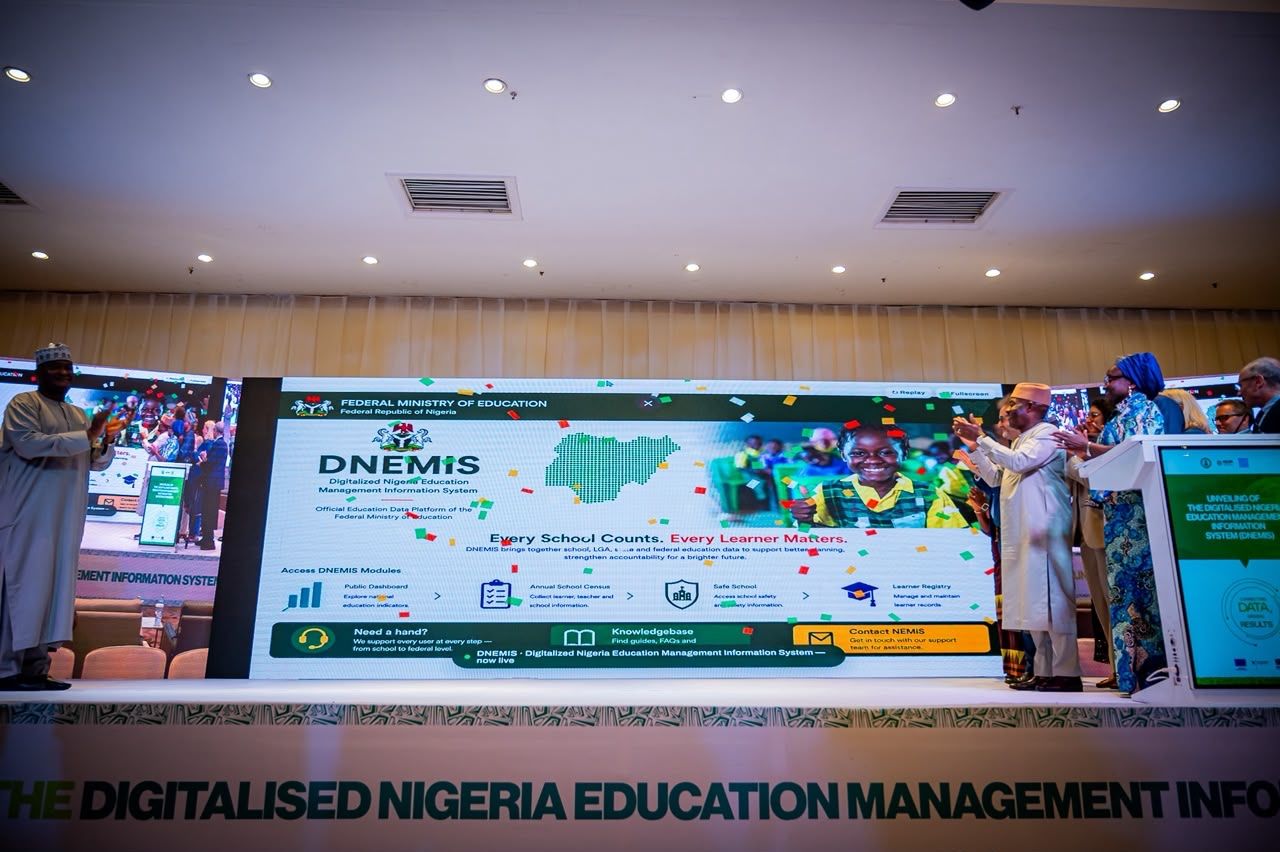
Nigeria’s Federal Ministry of Education officially launched DNEMIS at an event in Abuja, alongside a new public data portal and the inauguration of state implementation teams to support the rollout. Nigeria’s minister of education, Dr. Maruf Tunji Alausa, said the platform had already recorded data from 124,548 schools, representing 58.4% of national coverage, along with more than 40 million learners, 1.19 million teachers, 730,000 classrooms and 607,000 sanitation facilities.
“You cannot transform what you cannot measure. Today, Nigeria took a historic step towards building a smarter, more transparent and accountable education system with the unveiling of DNEMIS and the launch of the DNEMIS Portal.” – Dr. Maruf Tunji Alausa
DNEMIS digitizes Nigeria’s Annual School Census, replacing a manual, paper-based process that previously took nearly two years to compile and validate. The system consolidates records on schools, learners, teachers, classrooms and infrastructure into a single national database managed by the Federal Ministry of Education.
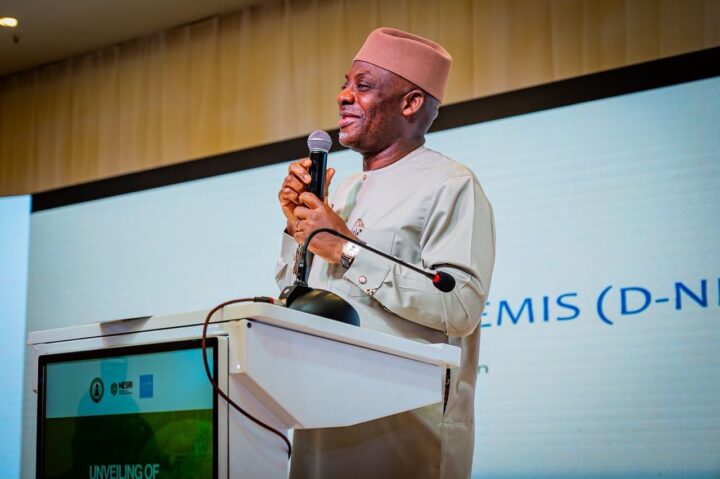
The Federal Ministry of Education has implemented DNEMIS with technical support from the HISP Centre at the University of Oslo (HISP UiO) and HISP Nigeria, and financial support from UNICEF Nigeria. At the launch, Alausa laid out his vision for data-driven resource allocation and decision-making at every level of Nigeria’s education system, and thanked the DHIS2 core team at the HISP Centre, along with UNICEF Nigeria, the European Union and other partners, for their ongoing collaboration.
“We appreciate the collaboration with HISP. As you help support this data architecture that we’re building, you’re also helping to support data being domiciled in the country—data sovereignty is what it’s called.” – Tunji Alausa
He added that DHIS2’s growth across the education sector will impact many countries, and that Nigeria will be a model for other countries looking to strengthen their education systems.
HISP Centre deputy director Ola Hodne Titlestad, who attended the launch with colleagues from DHIS2 for Education, said DNEMIS is now the largest DHIS2 implementation in the world and reaffirmed his commitment to supporting a strong, sustainable system in Nigeria.
“This launch is just the beginning,” Titlestad said. “We at the HISP Centre, University of Oslo, together with our local partner HISP Nigeria, look forward to a long-term collaboration with the Federal Ministry of Education and UNICEF. Together, we will continue to make improvements to the system, and make sure that there is strong capacity and ownership of DNEMIS at all levels of the education system, a critical factor in building successful and sustainable information systems.”
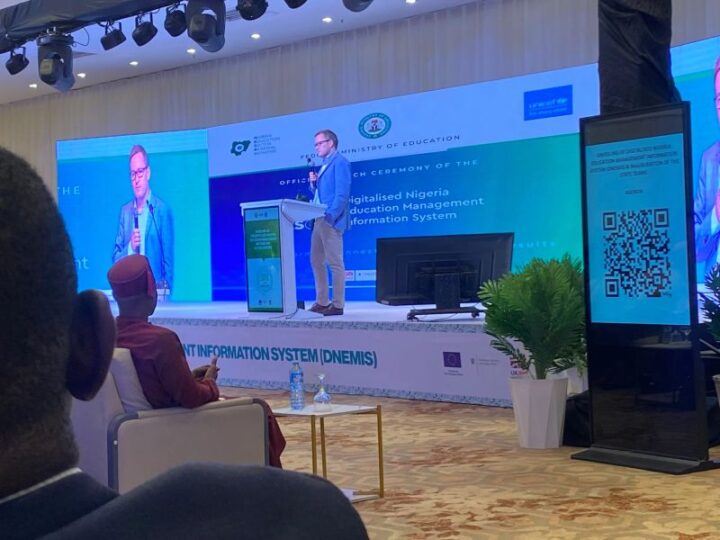
DNEMIS is the flagship platform under the Nigeria Education Data Infrastructure (NEDI), a reform effort under the Federal Ministry of Education’s Nigeria Education Sector Renewal Initiative (NESRI). The new Public DNEMIS Portal gives researchers, journalists, civil society organizations, development partners and members of the public access to selected official education data through an interactive online platform, according to the ministry.
Alausa previewed the platform’s scale weeks earlier at the DHIS2 Annual Conference in Oslo, Norway, where he delivered a keynote address on Nigeria’s education data reforms. At the time, he said DNEMIS already captured data on 32 million learners in 204,048 schools across all 36 states, the Federal Capital Territory and 774 local government areas, making Nigeria home to 32 million of the 45 million education records hosted globally on DHIS2.
Alausa told the conference audience that Nigeria was building one of the largest education data systems in Africa, and using it to transform how the country plans, manages and improves education nationwide.
The national rollout builds on work that began in January 2024, when the ministry started digitizing education data across twelve states, including Kebbi, Sokoto, Zamfara, Bauchi, Jigawa, Kano, Katsina, Borno, Adamawa, Yobe, Kaduna and Enugu, ahead of the nationwide expansion.
Nigeria has an estimated 240 million people and one of the world’s largest populations of out-of-school children, a figure the government puts at roughly 15 million. Ministry officials say a shared national database will help identify underserved schools, monitor enrollment trends and target interventions for out-of-school children more precisely than the previous paper-based system allowed.