Designing education data for decisions, not just reports: HISP at the 2026 GEM Report launch in Oslo
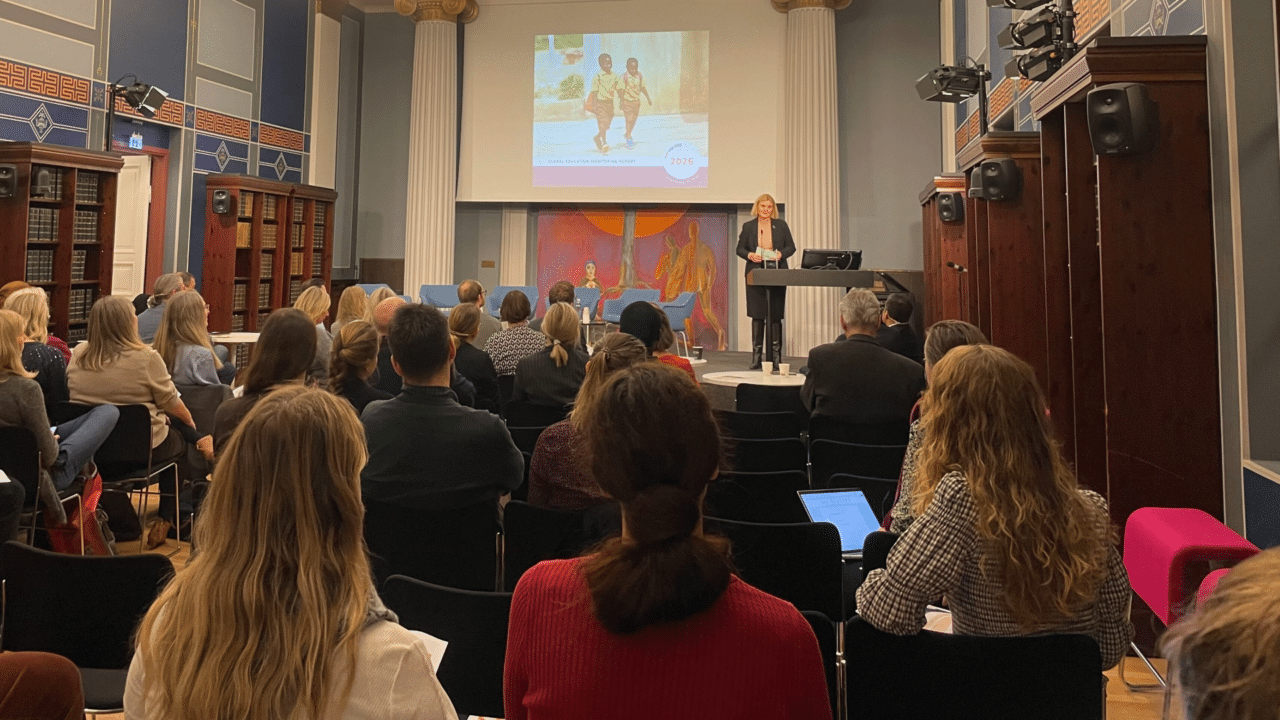
At the Oslo launch of the GEM Report 2026, HISP UiO joined the report’s director on a panel about how education data systems can support both national decision-making and global monitoring.
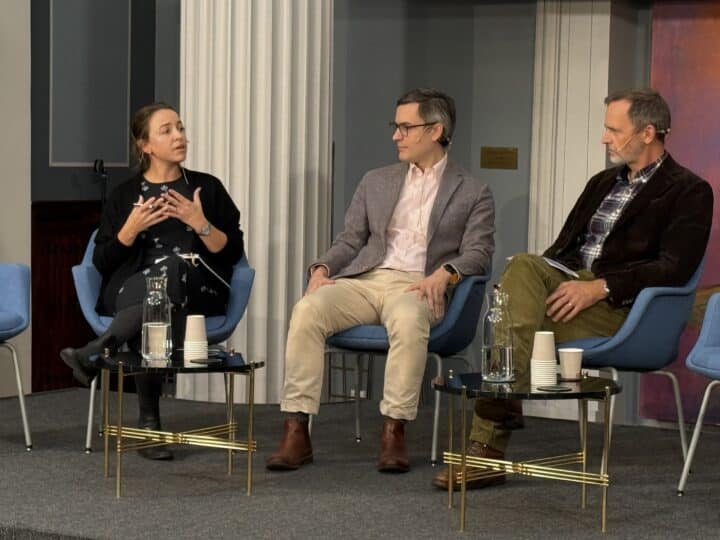
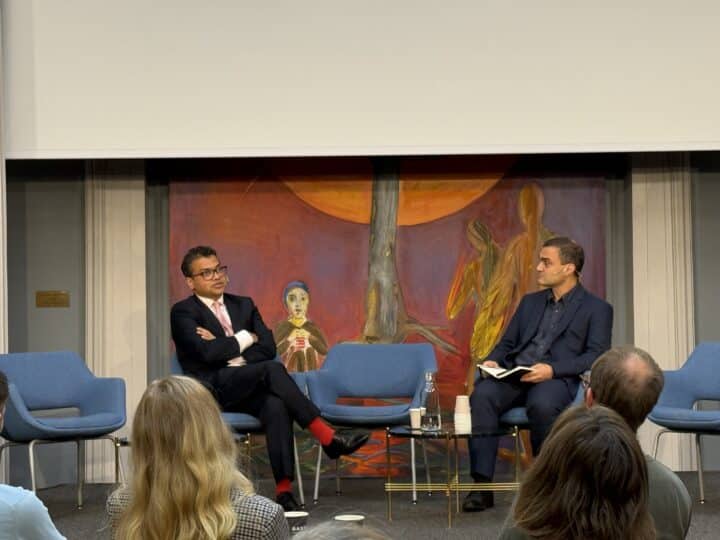
The HISP Centre at the University of Oslo (HISP UiO) took part in the national launch of the Global Education Monitoring (GEM) Report 2026 at the University of Oslo on 23 October. Sophia Kousiakis, DHIS2 for Education senior advisor at HISP UiO, spoke on a panel about measuring progress in education, moderated by GEM Report Director Manos Antoninis. Kousiakis was joined by two other distinguished panelists, Björn Andersson of UiO’s Centre for Educational Measurement and Thom Jambak, Vice President of the Union of Education Norway.
The panel addressed gaps in the data used to track progress toward Sustainable Development Goal 4 on education. According to the report, one in three countries does not report disparity by urban–rural location and one in two countries do not report disparity by wealth in primary and secondary education. The report also finds that the global indicator for equity, the parity index, says more about the progress of the indicator being disaggregated than about the state of inequality.
Kousiakis said gaps between national and international education figures often come from how national data systems are designed, not from errors. “It’s maybe not carelessness,” she said. “Maybe it’s what the system was built to see, and by whom and when.”
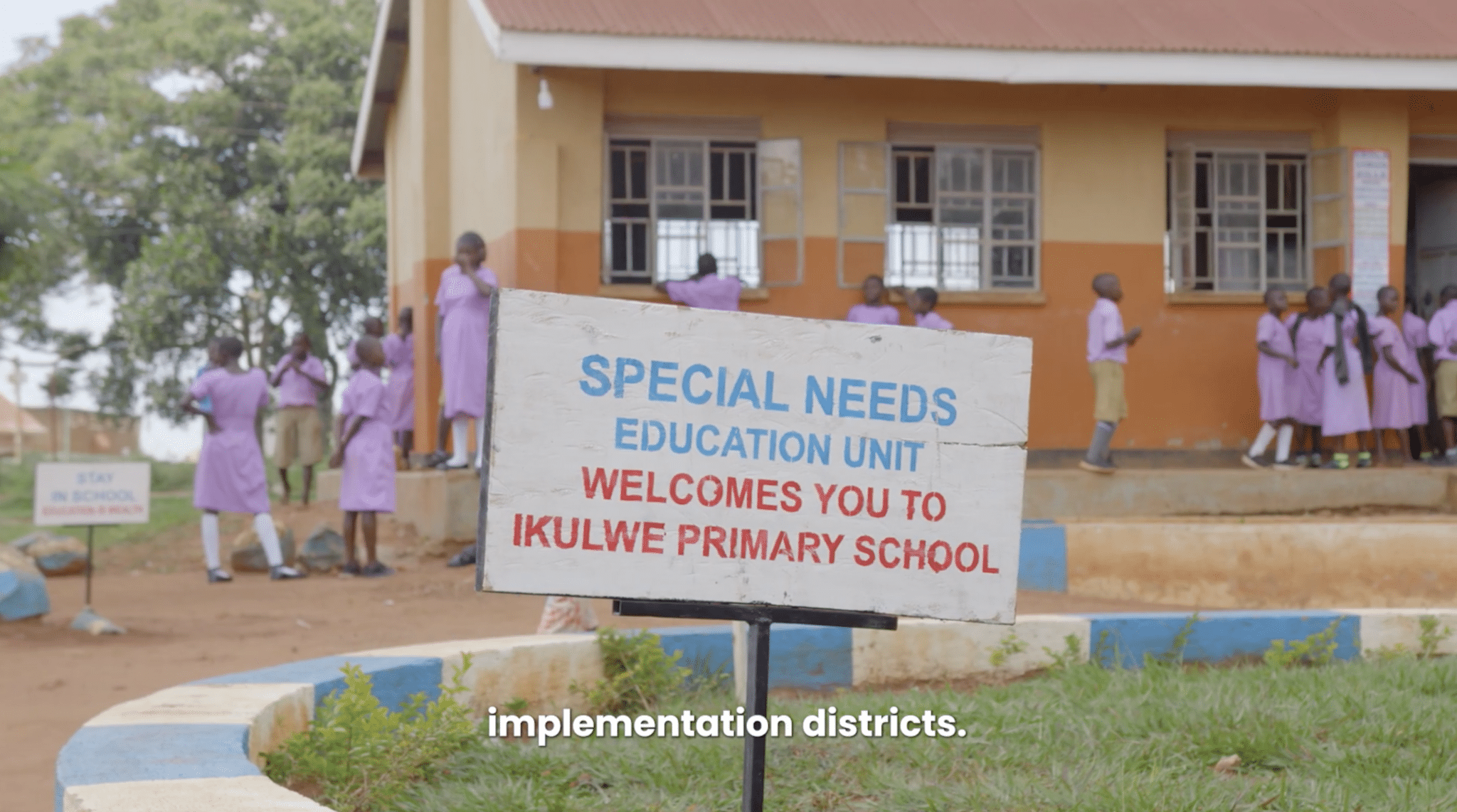
She gave three examples from HISP’s work with ministries of education in Africa. Most systems count enrolment once a year through an annual school census, she said, so a child who leaves school in March stays on the books until the next census. The report’s own Mozambique case study shows the effect of this: primary out-of-school rates are near zero in ministry records, but around 25% in household surveys.
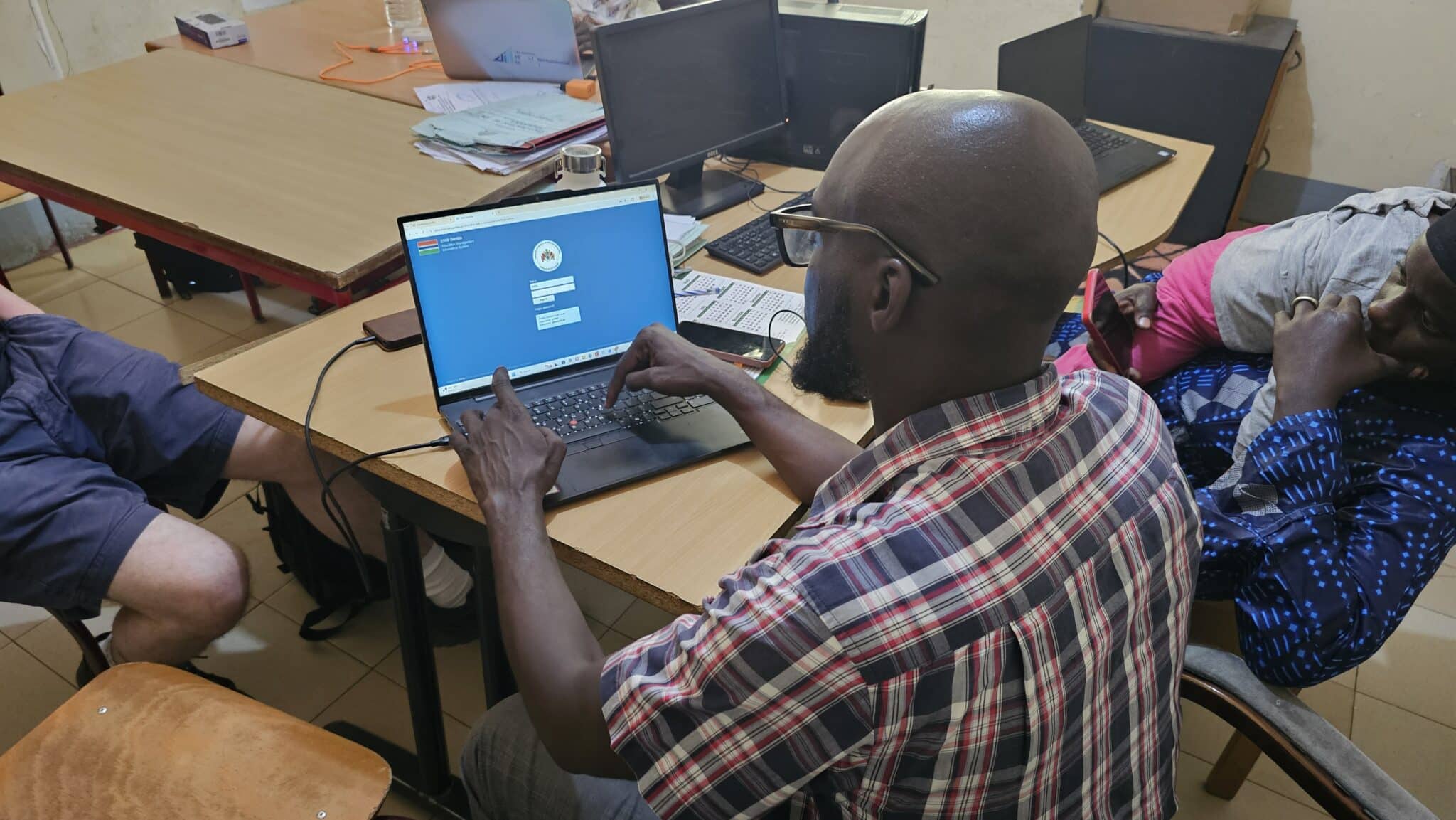
In The Gambia, a regional planner monitors school attendance daily, while major allocation decisions still sit with the central ministry, which has long sought to strengthen data use at school and regional level. In Togo, she said, regional officers use a solid annual school census for planning, but some decisions during the year cannot wait for it. Kousiakis noted that the examples come from exploratory fieldwork in three countries and are not representative.
Kousiakis said countries are at different stages, from basic headcounts to tracking attendance and individual learners. She said the absence of shared definitions, for example of what counts as being in school, was a major source of difference between figures. “Are we making a system for the next report… or for the next decision?” she asked.
Antoninis agreed that national systems should come first. Speaking about UNESCO’s work to let countries report results from their own national learning assessments internationally, he said “the whole point is not to just report a number—the whole point is to build the capacity of the country.”
Also during the panel, Andersson spoke about the difficulty of comparing learning outcomes across different assessment frameworks, and Jambak said teachers should play a larger role in producing and using evidence that influences policy decisions.
The event closed with a discussion on the future of the global education agenda between Antoninis and Dan Banik, UiO professor of political science and the academic director of Circle U at UiO’s Centre for Global Sustainability. They discussed national accountability for education targets, the role of education in creating jobs and supporting democracy, and priorities for the agenda after 2030. “Countries need to be accountable first and foremost to their citizens,” Antoninis said.
DHIS2 for Education is a free and open-source education management information system (EMIS) powered by the DHIS2 software, which is developed by the HISP Centre at the University of Oslo and freely available as a Digital Public Good. The platform is in use in more than 10 countries. The Gambia was among the first countries to pilot it: in April 2022, the HISP Centre and The Gambia’s Ministry of Basic and Secondary Education co-hosted a DHIS2 for Education Academy in Banjul.
The GEM Report is an editorially independent report, hosted and published by UNESCO. The 2026 edition, launched globally at UNESCO headquarters in March, is the first in a three-part Countdown to 2030 series and focuses on access and equity. It finds that the out-of-school population has risen for a seventh year in a row, reaching 273 million in 2024, while enrollment in primary and secondary education has grown by 30% since 2000.
Norad organised the Oslo launch with UiO’s Centre for Global Sustainability, the Ministry of Education and Research, the Ministry of Foreign Affairs, the Union of Education Norway, the Norwegian Global Campaign for Education and the Norwegian National Commission for UNESCO. It was the first time the report has been launched at UiO. In her opening remarks, Rector Ragnhild Hennum cited the HISP Centre’s work as an example of how the university helps countries measure progress toward their education goals.
Read the GEM Report 2026 and learn more about the Oslo launch.